Osteopathy: at the heart of functional health: manual care based on a holistic understanding of the body
Osteopathy is a structured structured manual therapeutic approachIt is based on an in-depth knowledge of anatomy, biomechanics, neurophysiology and the interaction between different body systems. It aims to help the body better manage pain, optimize function and promote lasting healthThis is achieved not only by targeting an isolated symptom, but by assessing the factors that contribute to overall functional dysfunction. Although osteopathy does not replace a formal medical diagnosis, it is now part of a complementary approach based on emerging clinical evidenceThis is particularly true for the management of common musculoskeletal complaints.
Several systematic reviews of the scientific literature, available on databases such as PubMed (MEDLINE) have analyzed the clinical efficacy of osteopathic interventions. A recent synthesis of some thirty systematic reviews of randomized controlled trials highlights a moderate beneficial effect of osteopathy in reducing pain and improving physical functionparticularly in cases of acute neck pain, chronic non-specific low-back pain, low-back pain during pregnancy and chronic non-oncological pain. (ScienceDirect)
These results are not isolated: another systematic review points out that, despite the heterogeneity of the studies and differences in methodological quality, osteopathic manual interventions often appear to be associated with an symptoms and functional mobility in adults. in adults (OEGO)
At Swiss Osteo, this research-based vision is expressed through a professional practice where clinical science meets therapeutic experience. clinical science meets therapeutic experience. Each consultation is designed to establish an individualized, reasoned approach to treatment, integrated into an overall health pathway, complementing other medical or paramedical professionals, such as general practitioners, specialists, physiotherapists and psychologists.
A structured, collaborative consultation: your session explained step by step
Osteopathy is a manual therapy that uses specific techniques to help the body better manage pain and regain comfortable function. Recent research suggests that therapeutic action is achieved in part by modulation of pain-related nerve signals (through downward inhibition pathways or autonomic nervous system regulation), rather than through simplistic mechanical “corrections”. (ScienceDirect)
Your step-by-step consultation
It all starts with an in-depth conversation. You’re invited to freely tell the story of your pain or discomfort: how it started, the circumstances in which it worsens or improves, and the associated physical or emotional stresses. Together, we explore the key factors – work posture, recent stress, repetitive movements, triggering events – and clarify your precise objectives: “I want to be able to carry my shopping without pain”, “I want to be able to sleep peacefully again” or “resume sport without restrictions”..
It’s this collaborative dialogue centered on your experience that guides the entire session, as it enables us to understand not only the expression of the symptom, but also the dynamics of pain in your daily life.
Next comes the clinical examinationalways guided by your immediate feedback. Through observation, palpation and functional mobility tests, we seek to exclude any serious pathology requiring urgent medical assessment (e.g. severe radiating pain, unfavourable neurological signs, progressive muscle weakness). Each test is carried out with your informed consent, respecting your comfort and sensations: “Does this palpation reproduce your discomfort? Is it bearable?”
This meticulous, interactive examination identifies areas of sensitivity, hypomotility or neuromuscular imbalance that contribute to persistent symptoms. It forms the basis of a personalized treatment plan.
The heart of care: collaboration, adapted techniques and patient autonomy
Once the clinical picture has been established, we draw up a targeted care plan together.. Before each therapeutic gesture, we explain the proposed approach: “We suggest a gentle mobilization of this area, is this right for you? Your explicit consent is an essential step. You remain an active participant throughout the treatment: your sensations and feedback guide adjustments in real time.
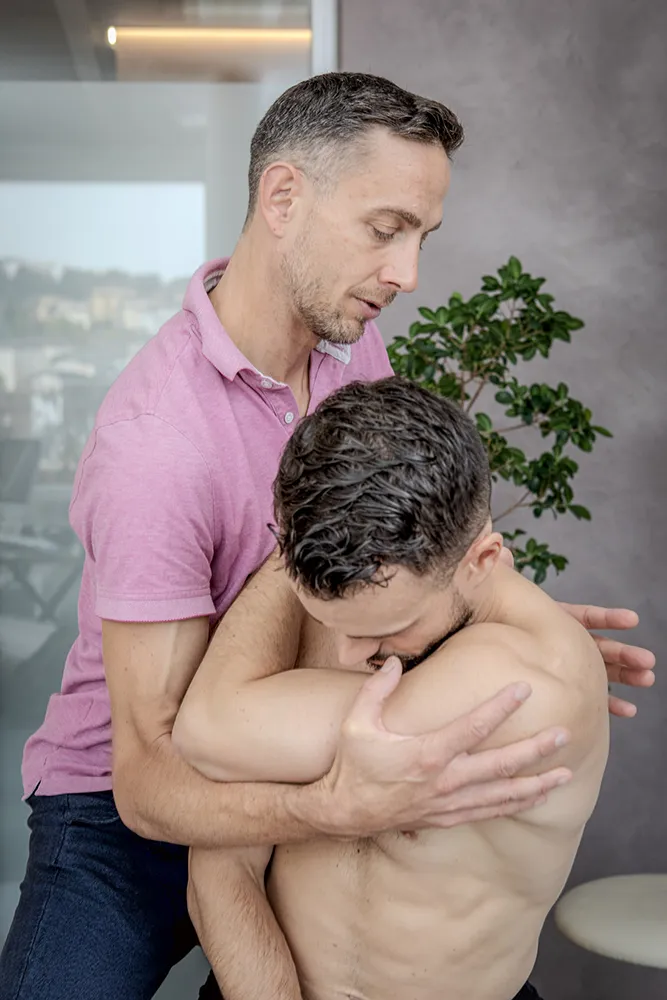
The osteopathic techniques we use are chosen according to your specific situation and what clinical science supports as potentially beneficial for your condition. These techniques include:
- HVLA (High Velocity, Low Amplitude) manipulations when indicated, to stimulate a soothing neurophysiological response at joint receptors.
- Passive or guided mobilizationswhere we accompany or facilitate movement to help your neuromuscular system regain comfortable functional mobility.
- Controlled stretching and contract-release techniquesYou’ll be actively involved in modulating tissue tension without undue pain.
- Gentle cranial or visceral approachesThese are used in a complementary way when clinically relevant and felt to be useful in your overall health context.
This variety of techniques reflects the integration of multiple skills at your service, while respecting your body’s biological limits and tolerance. It is part of a multidisciplinary multidisciplinary functional medicinewhere each modality is a tool in the service of a common goal: to improve your function, reduce pain and support your body’s overall adaptation.
For your independence: personalized advice and a follow-up plan
The session ends with an essential essential transmission phase: personalized practical adviceadapted to your condition, resources and life constraints. These recommendations may include :
- Simple home exercisestargeted at improving mobility, neuromuscular regulation or myofascial relaxation.
- Adjustments to your daily environmentWe can help you make adjustments to your daily environment, such as your sitting posture at work, the ergonomics of your workspace, or stress management strategies.
- Relapse prevention toolsWe’re here to help you prevent relapses, by placing movement education and understanding of your condition at the heart of your autonomy.
We provide you with a clear treatment plan, with measurable objectivesWe provide a clear treatment plan, with measurable objectives, and are available for ongoing support, either osteopathically or in collaboration with other healthcare professionals, depending on your needs.
Integration with multidisciplinary functional medicine
Modern osteopathy, as practiced at Swiss Osteo, does not operate in a vacuum. It is fully integrated into a functional vision of health where diagnosis, treatment, prevention and optimization of bodily functions are coordinated. In this approach, the osteopath collaborates with :
- Specialist or general practitioner for diagnostic assessments or further investigations.
- Physiotherapists, physical therapistsfor structured rehabilitation programs.
- Psychologists or stress management expertsWhen psycho-emotional factors influence pain or functional recovery.
This multidisciplinary integration enriches care, because pain and dysfunction are never isolated: they often emerge from a complex interplay between body mechanics, neurophysiological responses, lifestyle habits, emotional load and the physical environment. between body mechanics, neurophysiological responses, lifestyle habits, emotional load and the physical environment.. Thanks to this integrated model, you benefit from coherent, coordinated support geared towards lasting results.
Why choose Swiss Osteo – Boris Hueber in Lausanne?
When you choose Swiss Osteo, you benefit from professional osteopathy, based on an up-to-date understanding of the body’s systems, and enriched by the most up-to-date available. In a warm and reassuring environment, each patient is welcomed with listening, attention and transparency, so that we can co-construct a treatment plan adapted to his or her specific needs.
Our practice is based on in-depth training, rigorous clinical experience and sensitivity to contemporary healthcare issues. It is integrated into modern, integrative and collaborative care pathways, with a clear objective: to improve your function, reduce your pain and empower you to manage your own health.
If you are faced with persistent pain, functional limitations, repetitive strain injuries, or simply wish to optimize your overall well-being, make an appointment with Swiss Osteo in Lausanne. You’ll find a humane, professional approach tailored to your situation, supported by a reasoned, reflective clinical perspective.
Scientific knowledge is constantly evolving; at Swiss Osteo, we are committed to integrating this evolution into our practice, for a modern, responsible osteopathy focused on your health.