Mechanical stress: the simple principle behind many types of pain People often talk about “poor posture,” “wear and tear,” or a “fragile body.” In reality, much of the pain experienced by athletes and active people can be explained primarily by one thing: how we manage the mechanical stress placed on the body.¹ What is mechanical …

Mechanical stress: the simple principle behind many types of pain
People often talk about “poor posture,” “wear and tear,” or a “fragile body.” In reality, much of the pain experienced by athletes and active people can be explained primarily by one thing: how we manage the mechanical stress placed on the body.¹
What is mechanical stress?
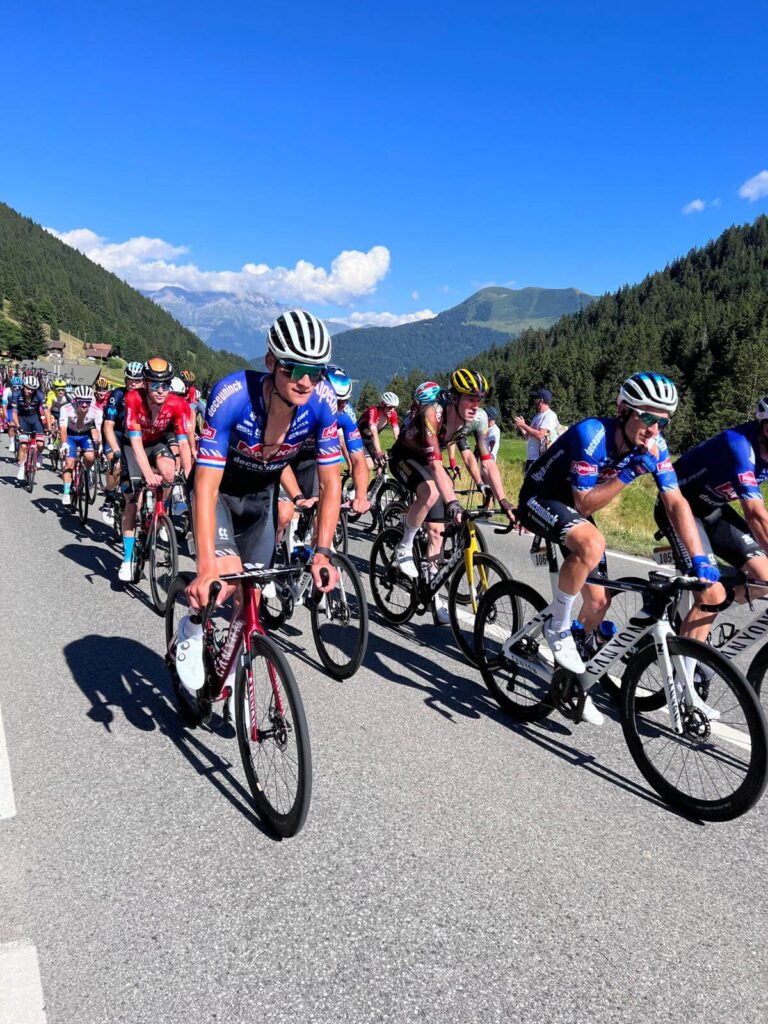
Every time you move, your muscles, tendons, bones, and joints are subjected to a certain amount of stress: this is mechanical stress. Running, jumping, strength training, playing soccer, carrying heavy loads, and doing back-to-back fitness classes—all of these activities place forces on your tissues.²
This stress isn’t “bad” in and of itself. On the contrary: it’s thanks to stress that the body adapts and becomes stronger. We can think of it as a simple balance:
- Workload is what you demand of your body (volume, intensity, frequency, impact).
- Capacity is what your tissues can handle and repair between workouts.
Tissues adapt precisely when the load exceeds their usual level by a small amount, provided they are given time to repair and strengthen themselves. The problem begins when this capacity is exceeded by a large margin or too often, without sufficient recovery time.
Not all fabrics adapt at the same rate
This is where an important detail comes into play:
- Muscles respond relatively quickly to a change in load: with regular training, increases in strength and muscle mass can be seen within a few weeks.³
- Tendons adapt more slowly: the first adaptations take weeks to appear, but more profound changes often take several months3.
- Bone also responds to mechanical stress, but changes in density and structure are typically measured over periods ranging from several months to the long term.³
In other words, you may feel “stronger” fairly quickly, even though the structures that transmit and absorb force (tendons, bones) haven’t yet fully adapted. This is one of the reasons why certain overuse injuries occur just when you feel like you’re “in shape.”
When the load exceeds capacity: “too much, too fast”
Most overuse injuries are not caused by a single wrong movement, but by an accumulation of stress that, little by little, exceeds the body’s ability to repair the tissues1,2.
Typical scenarios:
- A runner who increases their runs from 1 to 4 per week over the course of a few weeks, while maintaining the same pace as before.
- Someone who adds CrossFit or padel to an already busy schedule without lightening the load elsewhere.
- The athlete who goes back to training “just like before” after several months off, because “I used to do this without any trouble two years ago.”
On paper, these are good intentions. But for muscles, tendons, or bones that aren’t used to it anymore, it’s often too much, too fast. The result isn’t necessarily a major, dramatic tear, but rather pain that sets in gradually: the Achilles tendon, kneecap, periosteum, shoulder…1.
How This Model Changes the Way You View Your Pain
The “load/capacity” model is useful because it allows us to move beyond statements like “you’ve ruined everything” or “you have a weak back” and replace them with something more constructive:
“Your fabrics were exposed to more stress than they were designed to handle for some time.”
This helps explain why:
- Two people can play the same sport without experiencing the same aches and pains;
- Pain may occur after a change in volume or rhythm, even without a “wrong movement”;
- It is often possible to continue exercising, provided that the intensity and type of exercise are adjusted, rather than stopping all activity1,3.
How to Use This in Your Workout
We can’t control everything, but a few simple guidelines can really help:
- Avoid taking big steps: don’t suddenly double your weekly volume (kilometers, hours of exercise, weight lifted).
- Introduce new activities gradually: a new activity (running, HIIT, racquet sports, etc.) = start small and cut back a little on other activities at first, rather than adding it “on top of everything else.”
- Monitoring changes in pain: discomfort that appears immediately and then disappears completely the next day is not the same as pain that returns sooner and is more severe with each session.¹
- Think in terms of weeks, not individual sessions: what matters is the overall trend (gradual increase or sudden spikes), rather than the perfect session.
The idea isn’t to follow a military-style plan, but to ask yourself regularly: “Over the past few weeks, have I increased the workload faster than my body is used to handling?”
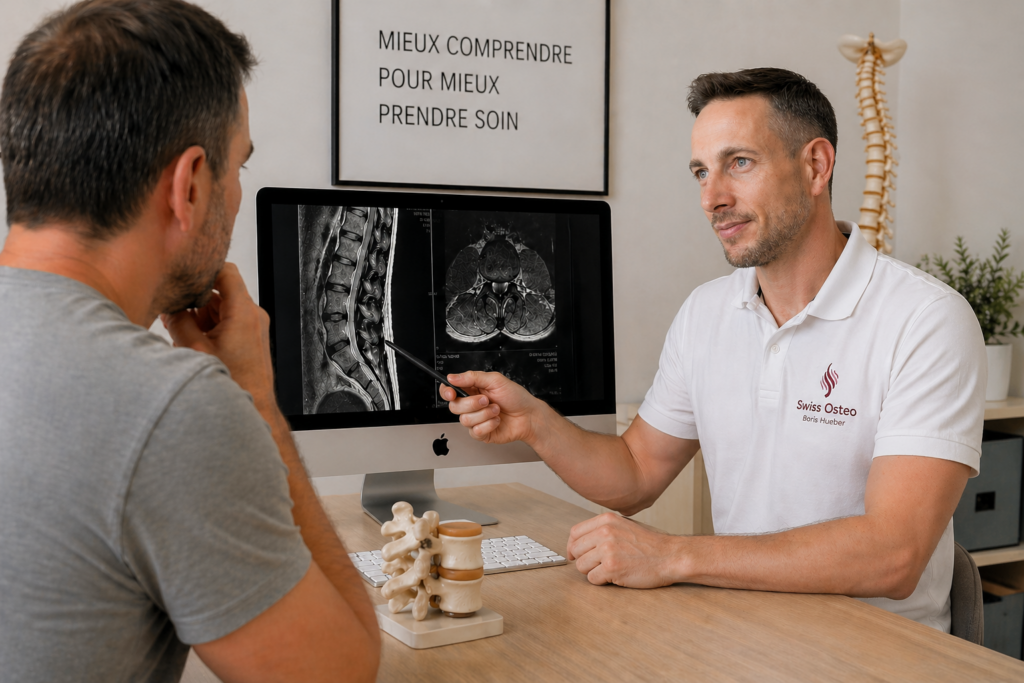
The Role of Osteopathy in This Story
In osteopathy, the goal isn’t to “put something back in place,” but to help you:
- Connect your pain to your recent training history: what you’ve increased, changed, or added to your workouts and daily routine.
- Manage pain through manual therapy by working on irritated tissues and the areas that are compensating for them, so that movement becomes more comfortable again.
- Adjusting your workload with you: deciding together what’s reasonable to keep, what’s best to lighten temporarily, and how to gradually increase it again without repeating the “too much, too fast” scenario.
We can’t promise a life free of injury. But understanding mechanical stress, the rate at which different tissues adapt, and how to manage the load often helps you make sense of your pain and develop a clear plan for staying active.
References
Clarsen B, Bahr R, Myklebust G, et al. Overuse injuries in sports: a comprehensive overview. Sports Med. 2018;48(12):2473–2494
Gabbett TJ. The training–injury prevention paradox: Should athletes train smarter and harder? Br J Sports Med. 2016;50(5):273–280.
Wiesinger HP, Kösters A, Müller E, Seynnes OR. Functional adaptation of connective tissue through training. Int J Sports Med. 2019;40(4):256–264.
Make an appointment
It only takes a few minutes to book a tour online.

Camille Bondil
Ostéopathe CRS